High-quality audio is just as important as stunning visuals in videography. Even the most cinematic footage can feel amateurish if the dialogue is unclear or filled with background noise. For videographers in 2026, choosing the right microphone ensures professional, crisp, and intelligible dialogue recordings — whether you’re filming interviews, corporate videos, weddings, or short films.
This guide covers the top microphones for clear dialogue, their key features, and tips for selecting the right gear for different scenarios.
1. Why Dialogue Clarity Matters
1.1 Enhances Storytelling
- Dialogue drives the narrative in films, vlogs, and corporate content.
- Clear, noise-free audio ensures viewers can focus on the message without distraction.
1.2 Increases Production Value
- Professional-quality audio differentiates amateur content from high-end productions.
- Poor audio often leads to reshoots, additional post-production, or lost credibility.
1.3 Reduces Post-Production Work
- High-quality recording minimizes the need for heavy noise reduction or EQ adjustments.
- Saves time and preserves the natural tone of voices.
2. Types of Microphones for Dialogue
2.1 Shotgun Microphones
- Highly directional, ideal for capturing dialogue while rejecting ambient noise.
- Usually mounted on boom poles or cameras.
- Example: Rode NTG5 — lightweight, low noise, perfect for outdoor and indoor shoots.
2.2 Lavalier (Lapel) Microphones
- Small clip-on mics, discreetly attached to clothing.
- Great for interviews, corporate videos, and wedding coverage.
- Example: Sennheiser EW 112P G4 — wireless system, reliable transmission, clear audio.
2.3 Handheld Microphones
- Ideal for on-the-go interviews, news reporting, or live events.
- Often used in documentary work where mobility is key.
- Example: Shure SM58 — durable, dynamic mic, excellent for spoken dialogue.
2.4 Condenser Microphones
- Require external power (phantom power).
- Capture full frequency range, ideal for studio setups or controlled environments.
- Example: Audio-Technica AT4053b — great for film sets or voice-over recording.
3. Key Features to Look For
3.1 Directionality / Polar Pattern
- Cardioid: Captures sound from the front; rejects side and rear noise. Ideal for dialogue.
- Supercardioid / Hypercardioid: Even narrower pickup, great for noisy environments.
- Omnidirectional: Captures all surrounding sound, not usually preferred for dialogue.
3.2 Frequency Response
- Look for microphones that capture human vocal range (85 Hz – 15 kHz).
- Ensures voices sound natural and intelligible.
3.3 Noise Handling
- Low self-noise is essential for clear dialogue.
- Shock mounts reduce handling noise.
- Windscreens or foam covers reduce wind and plosive sounds outdoors.
3.4 Connectivity
- XLR cables: Preferred for professional cameras and audio recorders.
- 3.5mm/TRS: Common for DSLR cameras and compact recorders.
- Wireless Systems: Ideal for interviews or moving subjects.
4. Top Microphones for Clear Dialogue in 2026
4.1 Rode NTG5
- Lightweight shotgun mic with low self-noise.
- Ideal for film, documentary, and outdoor interviews.
- Pros: Excellent directional pickup, durable, low handling noise.
- Cons: Requires XLR input and preamp.
4.2 Sennheiser EW 112P G4
- Wireless lavalier system, reliable for on-location shoots.
- Transmits clear dialogue over 330 ft line-of-sight.
- Pros: Discreet, professional audio, easy setup.
- Cons: Wireless interference possible in crowded urban areas.
4.3 Shure SM58
- Dynamic handheld microphone for interviews or live events.
- Extremely durable, classic choice for spoken audio.
- Pros: Robust, reliable, works in noisy environments.
- Cons: Less sensitivity than condenser mics.
4.4 Audio-Technica AT4053b
- Hypercardioid condenser microphone, perfect for controlled sets.
- Captures full vocal range with clarity and warmth.
- Pros: Studio-quality, versatile for film or voice-over.
- Cons: Requires phantom power and careful handling.
4.5 Zoom H5 / H6 with External Mic
- Portable recorder paired with XLR microphone.
- Ideal for documentary or travel videography.
- Pros: Flexibility, portable, multi-input recording.
- Cons: More equipment to carry and manage.
5. Tips for Recording Clear Dialogue
5.1 Choose the Right Mic for the Situation
- Outdoor shoots: Shotgun mic with windscreen or lavalier.
- Controlled indoor sets: Condenser or shotgun mics.
- On-the-go interviews: Wireless lav or handheld dynamic mic.
5.2 Placement & Technique
- Keep shotgun mics 6–12 inches from the subject, slightly above mouth level.
- Lavalier placement: near chest area, avoid rubbing on clothing.
- Handheld mic: maintain consistent distance from mouth.
5.3 Minimize Background Noise
- Use directional mics to reject ambient sounds.
- Avoid locations with heavy traffic, wind, or air-conditioning hum.
- Example: Chicago streets require careful mic placement to reduce traffic noise.
5.4 Use Windscreens & Pop Filters
- Reduces plosive sounds (“p” and “b” sounds) and wind interference.
- Essential for outdoor city shoots or rooftop filming.
5.5 Monitor Audio in Real-Time
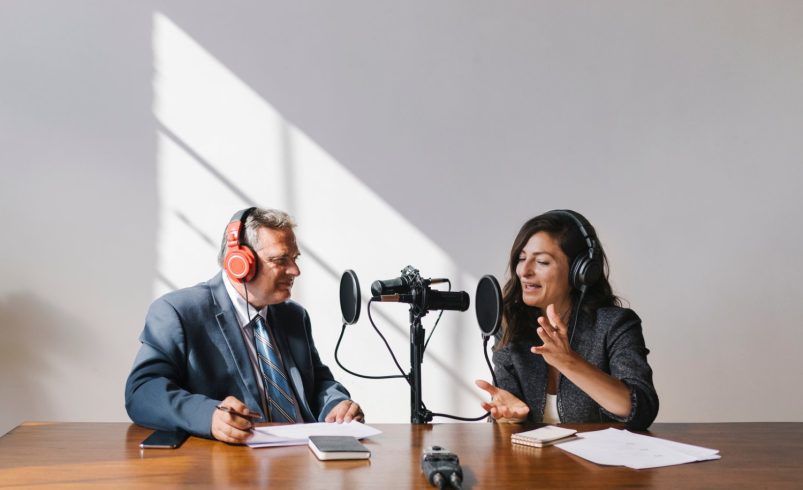
- Use headphones during recording to detect noise, distortion, or clipping.
- Adjust gain levels as needed to avoid peaking.
6. Post-Production Tips for Dialogue
6.1 Noise Reduction
- Tools like Adobe Audition or iZotope RX can remove background hum or hiss.
- Use sparingly to preserve natural voice quality.
6.2 EQ & Compression
- Enhance vocal clarity by boosting midrange frequencies.
- Apply gentle compression to balance volume levels across clips.
6.3 Syncing Audio & Video
- Use clapperboards, slate markers, or software sync for precise alignment.
- Essential for multi-camera shoots or external audio recordings.
6.4 Layering & Mixing
- Blend dialogue with background music and effects without overpowering.
- Maintain intelligibility for viewers.
7. Budget-Friendly Options That Deliver Professional Results
- Rode VideoMic NTG: Affordable shotgun mic for DSLR/camera use.
- BOYA BY-M1 Lavalier: Budget lavalier for interviews, vlogs, or small productions.
- Zoom H1n Recorder: Portable audio recording for quick setups.
These options provide professional-quality audio without breaking the budget, ideal for startups, small production teams, or independent videographers.
Conclusion
Clear dialogue recording is essential for professional videography. Choosing the right microphone, understanding its features, and applying proper placement, technique, and post-production practices ensures crisp, intelligible, and cinematic audio.
From shotgun mics for outdoor shoots, lavalier systems for interviews, handheld mics for on-the-go reporting, to studio condensers for controlled sets, the right choice depends on project type, environment, and budget.
Investing in good audio gear, monitoring audio carefully, and refining dialogue in post-production transforms ordinary videos into professional-grade content. Clear, high-quality dialogue enhances storytelling, engages audiences, and elevates the overall production value for any videography project in 2026.