Filming corporate videos in Chicago requires precision, planning, and a clear understanding of the client’s objectives. From promotional campaigns to internal training content, corporate projects demand professionalism while still allowing creativity to shine. In this behind-the-scenes case study, we explore how we successfully executed several corporate video projects in Chicago, highlighting techniques, planning strategies, and lessons learned.
1. Understanding the Client’s Goals
Before filming, we met with each client to define the purpose of the video:
- Marketing & Promotion: Videos aimed at social media or advertising campaigns
- Internal Communication: Training videos, company updates, or policy briefings
- Event Coverage: Conferences, product launches, and networking sessions
Having a clear understanding of goals allowed us to plan the shoot efficiently and tailor each project to achieve the desired outcome.
2. Pre-Production Planning
Script and Concept Development
- Collaborated with clients to outline scripts, talking points, or storyboards
- Developed creative concepts that aligned with branding and messaging
- Planned sequences for interviews, product demonstrations, or team highlights
Location Scouting
Chicago offers diverse environments for corporate projects:
- Downtown office spaces for professional aesthetics
- Iconic venues such as Millennium Park for outdoor promotional shoots
- Industrial spaces or co-working hubs for modern, creative visuals
Scouting ensured that locations were visually compelling, well-lit, and accessible.
Scheduling and Logistics
- Coordinated filming schedules to minimize disruption to client operations
- Arranged for necessary permits and permissions
- Developed backup plans for weather or technical challenges
3. Equipment and Technical Setup
Cameras and Lenses
- High-resolution cameras (4K or above) to maintain professional quality
- Multiple cameras for interviews, b-roll, and wide shots
- Lenses suited for indoor lighting and environmental storytelling
Stabilization and Motion
- Tripods for interviews and product demonstrations
- Gimbals for walking shots or dynamic motion sequences
- Sliders for smooth cinematic movement in promotional content
Audio Solutions
- Lavalier microphones for clear speech during interviews
- Shotgun microphones for ambient sound in busy office or event environments
- Backup audio recording devices to ensure consistency
Lighting
- LED panels with adjustable brightness and color temperature
- Diffusers and reflectors for soft, professional lighting indoors
- Natural light utilization for outdoor shoots to enhance realism
4. Filming Techniques
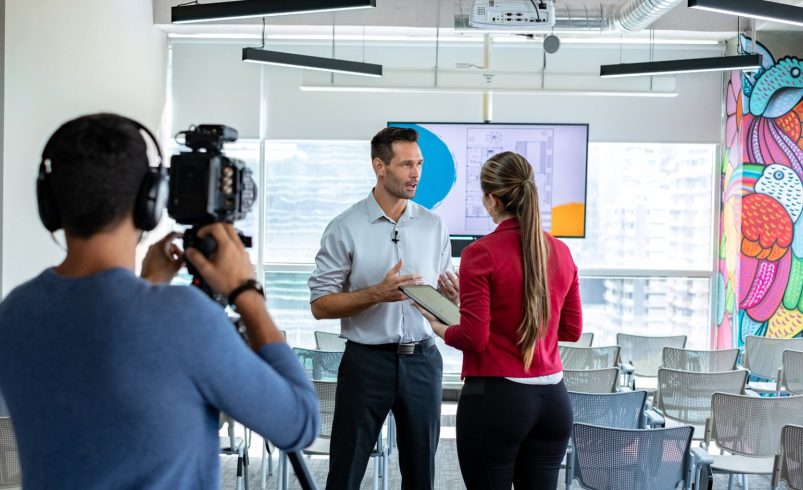
Interviews and Testimonials
- Position subjects with visually appealing backgrounds, avoiding clutter
- Use two cameras: one for a close-up and another for a wide-angle shot
- Capture natural body language to make content feel authentic
B-Roll Footage
- Show employees at work, interactions, and teamwork
- Capture office spaces, cityscape, and brand-specific visuals
- Include creative shots like product usage, meetings, and behind-the-scenes moments
Corporate Events
- Cover speeches, presentations, and networking moments
- Use multiple angles to capture both the presenter and audience reactions
- Slow-motion and time-lapse sequences can enhance event storytelling
5. Post-Production Strategies
Editing
- Combine interviews, b-roll, and event footage to create cohesive narratives
- Edit sequences according to client objectives: promotional, educational, or archival
- Incorporate brand guidelines, graphics, and lower-thirds
Color Grading and Audio
- Correct lighting inconsistencies and adjust tone for professional visuals
- Balance audio levels, remove background noise, and enhance clarity
Delivery Formats
- Export videos optimized for social media, websites, or internal use
- Include subtitles, captions, and optional translations if required
6. Challenges and Solutions
Tight Schedules
- Pre-planning and shot lists kept production efficient
- Quick setup and breakdown minimized downtime for client operations
Variable Lighting Conditions
- Used adjustable LED lighting and fast lenses to handle low-light areas
- Color grading in post-production ensured consistent tone across scenes
Maintaining Professionalism
- Videographers blended seamlessly into corporate environments
- Careful attention to etiquette and client expectations maintained credibility
7. Lessons Learned
- Clear communication with clients is critical for a smooth production
- Pre-production planning saves time and improves final video quality
- Capturing both staged and candid moments ensures authentic storytelling
- Multi-camera setups and stabilized shots enhance production value
Final Thoughts
Corporate video production in Chicago is a balance between creativity and professionalism. By planning meticulously, using the right equipment, and understanding client objectives, videographers can produce high-quality content that resonates with audiences, strengthens brand identity, and achieves measurable goals.
From downtown offices to iconic outdoor locations, Chicago provides a rich canvas for corporate storytelling. Behind the scenes, attention to detail, adaptability, and storytelling focus ensure that each corporate project is executed flawlessly, producing videos that leave a lasting impact.